MARKETING BREAKDOWN
How to read this piece: This is a marketing plan, not a product review. It explains how Legacy Elite – the agency that publishes this site – would market a specific tech company, using only facts we have already verified in our Brick and Brick Night guide. It is not a hands-on product test, and it includes no promised results. Because Legacy Elite publishes Elite AI CMO and would be the agency doing this work, treat this as a first-party proposal, not an independent endorsement. The agency’s business site is legacy-elite-growth.netlify.app.
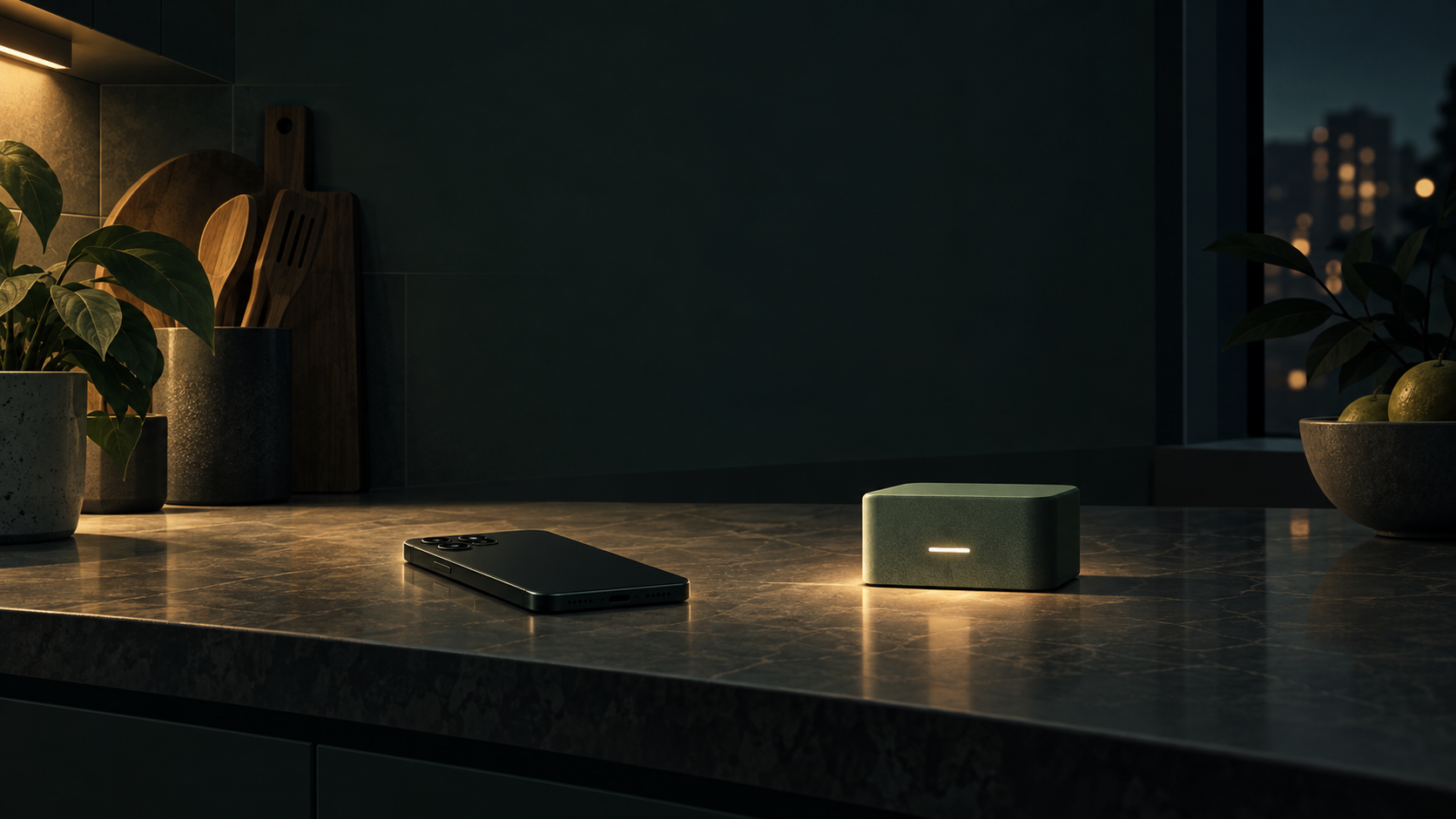
Brick pairs a physical device with an app: tap to start a block, return to the device to end it.
What Brick sells, in verified facts
Brick is a physical device that pairs with an app. You choose the apps or websites to block, tap the device to start a session, and normally return to the physical Brick to end it. From our verified guide:
- The standard Brick is listed at $59, with no battery, Wi-Fi or charging requirement, and lifetime app access without recurring fees, according to its product page.
- Brick Night, a separate device that adds a Bluetooth zone for automatic blocking in a sleep space, is listed at $129 in the main catalog; a separately labeled no-charger page lists $99.
- The manufacturer says it works with iOS and Android across multiple phones, with Strict Mode and five documented Emergency Unbricks.
Prices and compatibility details can change, and the company’s own pages disagreed on the minimum iOS version when we checked. Any marketing we ran would start from the current product pages, not from memory.
The positioning problem we would solve
The tempting way to sell an app blocker is to promise outcomes: better sleep, recovered hours, changed families. We would not do that. There is no independent outcome study behind those promises, and unsubstantiated claims are both a compliance risk and a trust killer. Our verified guide makes the same point: physical friction is a plausible design choice, not proof of behavior change.
So the positioning we would sell is the mechanism, not the miracle: a physical step between an impulse and a distracting app. Built-in screen-time controls are easy to dismiss. A device on the kitchen counter is not. That is a concrete, demonstrable difference that a 15-second video can show without claiming anything unproven.
The campaign we would build
One landing page per product. Brick and Brick Night are different devices at different prices, and the catalog already confuses buyers (a $129 listing beside a $99 no-charger page). We would give each product one page with one price, what is in the box, phone requirements, and one call to action. No cross-contamination between the two.
Ad angles that demonstrate, not promise. Short video ads built around the physical ritual: tap the Brick, phone goes dumb, walk away. Angles we would test: the phone staying out of the bedroom, the dinner table rule, and the “my screen-time settings take two taps to undo” comparison. Every creative shows the mechanism. None of them promises sleep, focus or productivity outcomes.
Search ads on high-intent terms. Queries like “physical app blocker,” “how to block apps without willpower” and “screen time device for adults” signal someone already shopping for the category. Those clicks go to the matching product page, not the homepage.
Every inbound call answered. This is Legacy Elite’s own specialty: an AI receptionist that picks up product questions – compatibility, shipping, which model fits – captures the caller’s details and books the order conversation instead of letting the call go to voicemail. For a small direct-to-consumer brand, missed calls are missed orders. That service is what Legacy Elite sells at legacy-elite-growth.netlify.app, and it is the piece we would put in place first for a brand like this.
Follow-up that respects the product’s ethics. Cart-abandonment and post-purchase emails written in the same register as the product: plain, calm, no fake countdown timers. A brand selling freedom from manipulative design cannot market with manipulative design. The emails would carry setup tips, block-list ideas and the Emergency Unbrick policy – the details that reduce refunds.
Watch: the short version of this piece. Text and motion graphics; no hands-on footage.
What we would not do
- No guaranteed outcomes. “Sleep better” becomes “keep the phone out of the bedroom” – an action the product can actually perform.
- No invented scarcity or urgency. The catalog sells year-round; the marketing should say so.
- No cherry-picked seller-site testimonials presented as independent evidence. Our guide already flags those as marketing evidence, and ads would follow the same rule.
- No hiding the relationship. This site is published by Legacy Elite, and any campaign we ran would carry the required disclosures.
Why we chose Brick first
Because we have already done the verification work. Our source-checked guide documents the prices, the two-device lineup, the compatibility cautions and the exact places where the seller’s own pages disagree. Marketing built on verified facts survives contact with ad-platform review and with customers. Marketing built on hype does not.
That standard is not a tactic for us; it is the point of the company. Legacy Elite’s founder, Calvin Sheppard, calls himself a first-generation Legacy Builder. He is his mother’s oldest son, from Los Angeles, and before his grandfather passed, he charged Calvin with taking care of the family. The agency – and the way it markets – is how he intends to keep that charge: build something durable, do it straight, and make the work worthy of the name on it. An agency that cuts corners with other people’s claims would be building on sand.
What Legacy Elite is building next
The same standard sits behind Legacy Elite’s own product, Elite CMO – what Sheppard calls a business growth solution: an autonomous marketing department that business owners design around their own company, so the marketing gets handled while they handle the work. The beta is opening in limited spots, with a 7-day free trial before any paid plan. If you run a business and want marketing handled the way this article describes, you can join the Elite CMO beta waitlist.
And if you believe small businesses deserve that kind of marketing department and want to help launch it, Sheppard is funding the rollout through a GoFundMe – office space, marketing infrastructure, client acquisition tools and a dev team for faster rollout. You can donate to the GoFundMe here. Donations are gifts to the fundraiser, not purchases, and they come with no product, perk or return promised.
Sources and verification
Read November 17, 2026. Product facts are drawn from our verified guide and the seller pages it cites; they are not independent test results. Statements about Legacy Elite, Elite CMO and the founder’s story are the company’s own.
- Brick and Brick Night: Physical App Blocking Explained (our verified guide, with links to the Brick product, FAQ and catalog pages)
- Legacy Elite – AI receptionist and ads for service businesses
- Elite CMO beta waitlist
- GoFundMe: Help Me Launch Elite CMO – The AI Marketer Every Small Business Can Afford
- Our research method
Disclosure: Elite AI CMO is published by Legacy Elite. This article describes Legacy Elite’s own marketing services, product and fundraiser, and links to the agency’s business website, its beta waitlist and its GoFundMe. It contains no paid placement from Brick or any other company mentioned.
Our research method | Privacy & disclosures | All playbooks | Buying guides