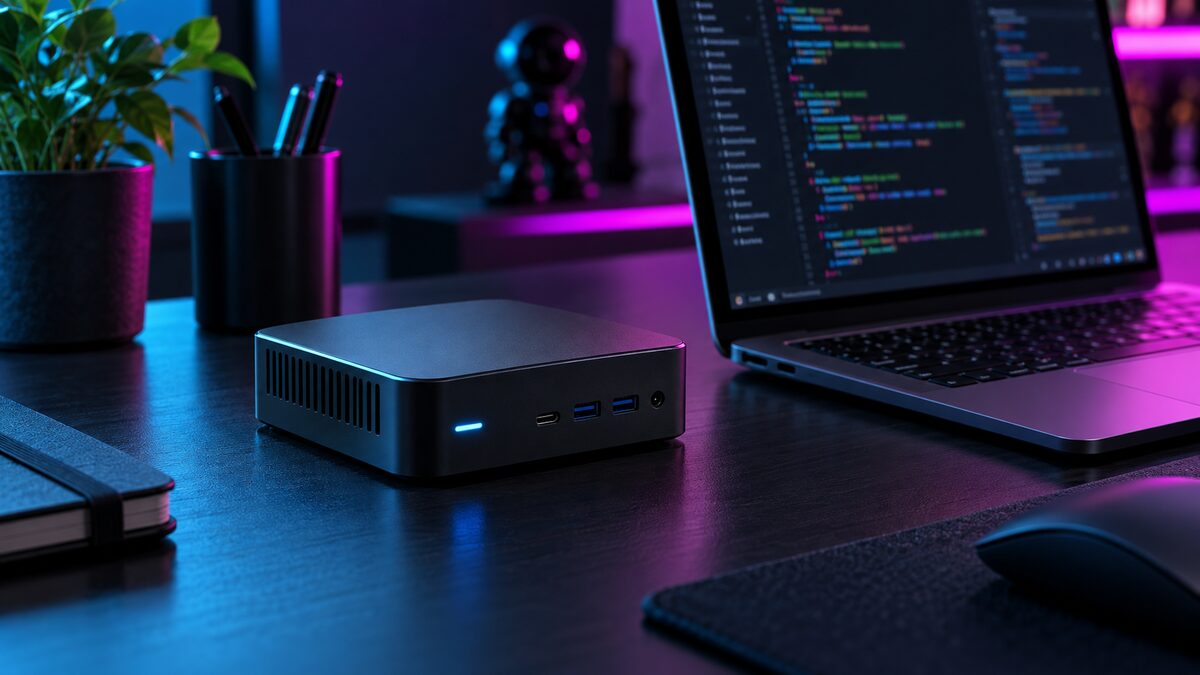
OpenAI finally made hardware, and it is not a phone, a pin, or a pair of glasses. It is a little box that writes code.
What the Codex Micro actually is
The Codex Micro is a dedicated AI agent appliance, about the size of a stack of sticky notes, built around OpenAI’s Codex coding model. You plug it in, connect it to your repos, and it works through programming tasks on its own compute instead of tying up your laptop. Think of it as hiring a very fast junior developer who never sleeps, never complains, and costs less than a weekend away.
Under the hood, nothing here is exotic, and that is deliberate. OpenAI took the same agent loop that runs in the cloud and gave it a permanent address, its own storage, and a standing invitation to your repositories. The novelty is not the silicon. It is the commitment: an assistant that exists even when your laptop is closed.
At $230 it is priced like an experiment, and that is exactly what it is. OpenAI is testing whether people want AI that lives in a physical object rather than a browser tab. Early hands-on coverage has been split: hardcore coders expected more, but reviewers who treated it as a tireless assistant came away impressed, some calling it a genuine productivity game changer for teams already living inside the OpenAI ecosystem.
Where it shines
Offloading is the whole pitch. Long refactors, test generation, documentation passes, and dependency upgrades run on the Micro while your machine stays free. For solo founders and small dev teams, that separation feels surprisingly luxurious, like having a second desk in the room.
In daily use, the Micro settles into a rhythm that is easy to get attached to. You hand it a ticket before standup, and by lunch there is a draft pull request waiting with tests included. It is not magic, and it is not fast in the way a senior engineer is fast. It is patient in a way no human is: it will grind through a tedious migration file by file, hour after hour, without losing focus or morale.
The hardware itself fades into the background, which is the point. A small status light tells you it is working, a soft chime tells you it is done, and that is the entire interface. Everything else happens in the tools you already use: your repo, your issue tracker, your chat.
Setup is genuinely simple, and because the device is purpose-built, there is no wrestling with API keys and local environments to get started.
There is also something quietly powerful about separation. When the agent runs on its own box, a runaway process cannot freeze your editor, a bad dependency install cannot poison your machine, and you can unplug the whole experiment by pulling one cable. For teams nervous about letting agents loose on production hardware, that physical boundary is a feature, not a gimmick.
- Runs agentic coding tasks without hogging your laptop
- Dead-simple setup for anyone already using ChatGPT or Codex
- A conversation piece that is actually useful
What to know before buying
This is version one of a brand-new category. If your workflow lives outside OpenAI’s tools, the value drops fast. Power users have also noted that the most demanding, multi-step jobs still need a human steering the wheel.
Usage costs deserve a look too. The box itself is cheap, but heavy agent workloads consume paid compute, and a busy month can quietly outrun a ChatGPT subscription you already have. Treat the sticker price as the entry fee, not the total cost of ownership.
Who should buy the Codex Micro
Buy it if you already live inside OpenAI’s toolchain and your backlog is full of well-defined, grindy work: test coverage drives, documentation debt, version bumps, small isolated fixes. Solo founders will feel like they hired help. Small teams will feel like they added a shift.
Skip it if your code lives in a different AI ecosystem, if your work is mostly ambiguous architecture decisions, or if you were hoping for a gadget that entertains. The Codex Micro is a tool with a desk job. It has no screen, no games, and no interest in being loved. It just wants your tickets.
Pros
- Affordable entry into AI hardware
- Frees up your main machine
- Great fit for OpenAI-centric workflows
Cons
- First-generation quirks
- Limited value outside the OpenAI ecosystem
- Not a replacement for senior judgment