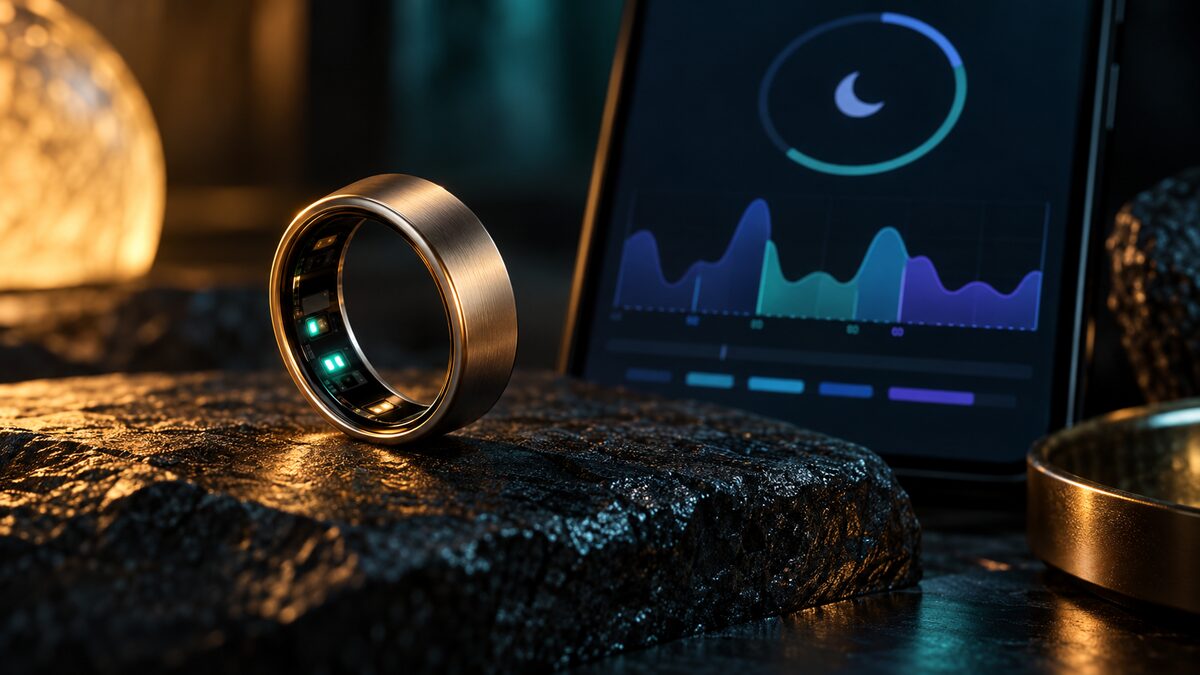
Most health trackers scream “I am monitoring my heart rate” from across the room. The Oura Ring 5 whispers it.
The glow-up the ring needed
The fifth-generation Oura is the first one thin enough to pass as ordinary jewelry. That matters more than any spec sheet line: the best health tracker is the one you actually wear 24 hours a day, and previous rings lost people at the gym, the shower, and the “does this go with my outfit” test.
Reviewers who have worn it report a tougher finish, better battery life than the Ring 4, and a fit that finally rivals ordinary bands. Competing rings like the RingConn 3 have reached a similar size, but Oura’s app and sleep staging remain the benchmark everyone else chases.
The finishes have grown up too. Brushed titanium, a deep matte black, and a gold tone that reads as jewelry rather than gadget mean the ring survives the wedding test, the boardroom test, and the gym test in the same day. Sizing kits ship first, and Oura’s sizing is precise enough that swapping fingers is a choice, not a requirement.
The sensors sit in a slightly reshaped interior bump that most wearers stop noticing within a day. That sounds like a small thing. After three weeks of uninterrupted wear, it is the whole thing.
What it tracks
Sleep stages, readiness, heart rate variability, temperature trends, blood oxygen, cycle tracking, and daytime stress, all distilled into three scores you can read over coffee. The subscription ($5.99/month) unlocks the deep data; without it you get the headlines only.
In practice, the three-score system is what keeps people wearing it. You wake up, glance at readiness, and make one decision: push today or protect today. The people who love Oura are not spreadsheet athletes; they are ordinary humans who wanted a gentle, accurate nudge and got one. The app has also gotten better at explaining itself, attaching plain-language reasons to a bad score instead of leaving you to guess.
- Week-long battery means you charge on your schedule, not the ring’s
- Sleep tracking remains the best in the wearable business
- Discreet enough for weddings, boardrooms, and black tie
The catch
The subscription stings. You are paying up to $499 for hardware and then a monthly fee forever. And while Oura is the style winner, it still lacks a display, so runners and lifters who want live stats mid-workout should look at a watch instead.
Battery life lands around a week depending on size and settings, and the charging routine is painless: drop it on the puck during a shower every few days and you will never see a dead ring. Compare that to the nightly charge most smartwatches demand and the always-on promise starts to make sense.
Sharing and family features have quietly matured as well, so couples and training partners can compare trends without oversharing. It is a small social layer, but it turns the data into conversation instead of homework.
One more honest note: the ring cannot save you from yourself. It will show you, in unflattering detail, what late meals, alcohol, and short sleep do to your recovery. Some people find that motivating. Some people find it annoying. Both groups are right.
Who should buy the Oura Ring 5
Buy it if you want serious sleep and recovery insight without another screen in your life, and especially if you have tried a smartwatch and quit wearing it. The ring wins on compliance, and compliance is where the data comes from.
Skip it if your training depends on pace, laps, or live heart-rate zones, or if another monthly subscription makes you itch. For those athletes, a watch remains the right tool. For everyone else, this is the health tracker most likely to still be on your body in six months.
One caveat on longevity: rings live hard lives on hands, and even the tougher finish will collect micro-scratches over a year of barbells and gardening. Most wearers report it ages like a wedding band, not like a phone. Plan accordingly.
Pros
- Finally thin enough to forget you are wearing it
- Best-in-class sleep and recovery insights
- Improved durability and battery
Cons
- Subscription required for the good stuff
- No screen, no live workout stats
- Premium price