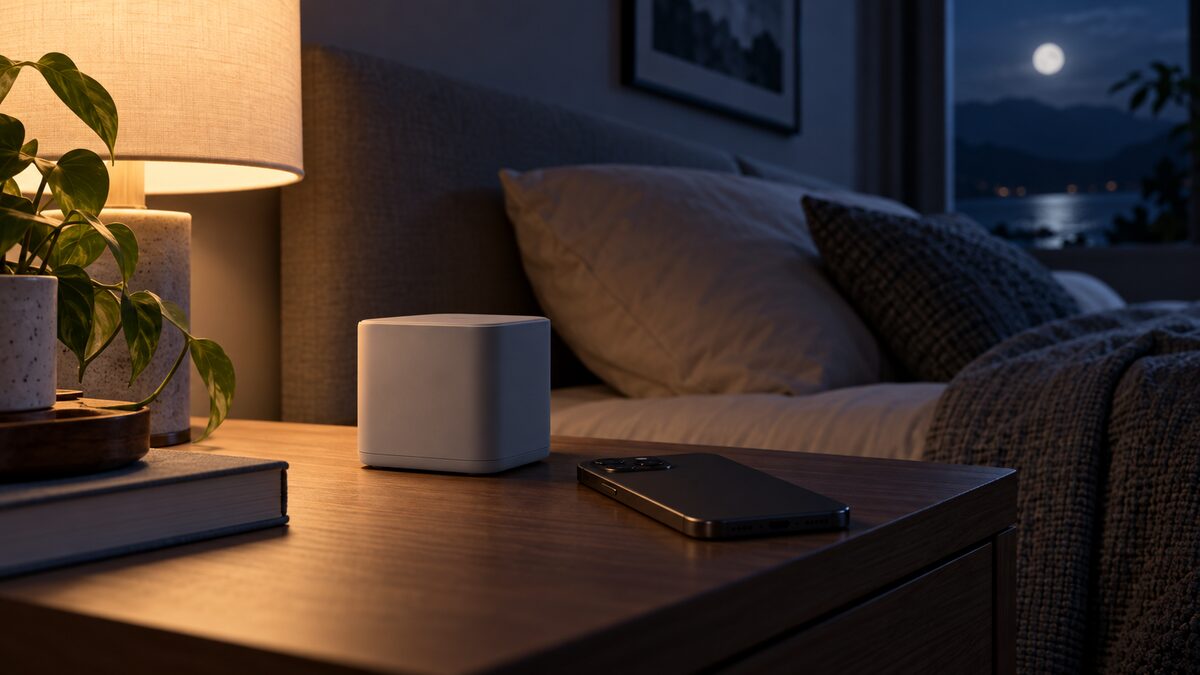
The most useful gadget of the year is a hunk of plastic whose only job is to stop you from using a more expensive gadget.
Willpower, but physical
Brick is deceptively simple: tap your phone to the little NFC-equipped cube and your chosen apps lock until you tap it again. Screen-time limits fail because dismissing them takes one tap. Brick moves the “unlock” across the room, and that tiny friction is the whole trick. Long-term users report real behavior change: better sleep, focused work blocks, and mornings that start with coffee instead of comments.
The setup takes two minutes: choose the apps that eat your life, tap the Brick, done. Social feeds, short video, news, games, whatever your personal kryptonite is. Everything else on the phone keeps working, which matters, because maps, messages, and music are not the enemy. The enemy is the infinite scroll, and the Brick knows it.
The new Brick Night ($129) takes the idea further, automatically “bricking” your phone when it is in the same room on a schedule you set. Your bedroom becomes a no-scroll zone without you making a decision at 11:47 PM, which is precisely when decisions fail.
Parents have figured out the secondary market for this thing: it is the first parental control teenagers cannot negotiate with, because the object does not argue. Bricking the family phones at dinner has become a ritual in some households, and the teenagers report hating it slightly less than expected, which is a rave review from that demographic.
There is no subscription, no account harvesting your habits, and no dashboard gamifying your virtue. The company sells a cube. The business model aligns with the mission in a way that wellness apps simply cannot claim.
The brick ritual has a social side too: couples report bricking together before a walk, and roommates run shared bricks for house movie nights. Anything that makes a virtue visible tends to spread, and this one is literally a colorful object on a counter.
Why it works when apps fail
Every software blocker lives one tap away from being ignored. Brick lives on your desk, your kitchen counter, your entryway. The physical ritual of tapping to unlock turns mindless scrolling into a deliberate choice, and most people simply make the better choice more often.
- Physical unlock creates friction screen-time apps cannot
- Brick Night automates phone-free bedrooms on your schedule
- Fully customizable: you choose which apps lock and when
The honest caveat
You can outsmart it (emergency unlocks exist), and $59 for an NFC puck will strike some people as absurd. But if a $59 object buys back an hour of your evening every day, the math gets friendly fast.
The ritual cuts both ways, of course. Leave the Brick at the office and your evening unlock depends on remembering to care. Most users solve this by buying a second one for the bedroom, which is either the product working exactly as intended or very clever retail. Probably both.
Who should buy a Brick
Buy it if your screen-time report embarrasses you and every software solution has failed. It is the cheapest intervention in the attention economy, and unlike most, it is on your side.
Skip it if your phone habits are already healthy, or if you need your feeds locked on someone else’s schedule. This is a tool for people who want to want less phone. If you do, it works.
A week in, most users report the same arc: day one is irritating, day three is revelatory, and by day seven the phone feels like a tool again instead of a slot machine. The Brick did not change the phone. It changed the default, and defaults run lives.
Sixty dollars for an hour a day is the cheapest attention on the market. The Brick is not magic and it is not trying to be. It is a door you close on purpose, and that turns out to be the feature every app forgot to build.
Worth noting for the skeptical: the company publishes no miracle claims, just a physical mechanism and a money-back window. In a market thick with digital wellness vaporware, that honesty is itself a feature.
Pros
- Actually changes phone habits
- Simple, reliable, no subscription
- Brick Night is a clever sleep upgrade
Cons
- Requires buying into the ritual
- Determined scrollers can cheat